Table of content Table of content
The BepiColombo mission is a joint effort by the European Space Agency (ESA) and the Japan Aerospace Exploration Agency (JAXA) to study Mercury. Named after the Italian mathematician Giuseppe Bepi Colombo, the mission aims to increase understanding of one of the solar system’s least accessible planets.
Mission Setup and Partners
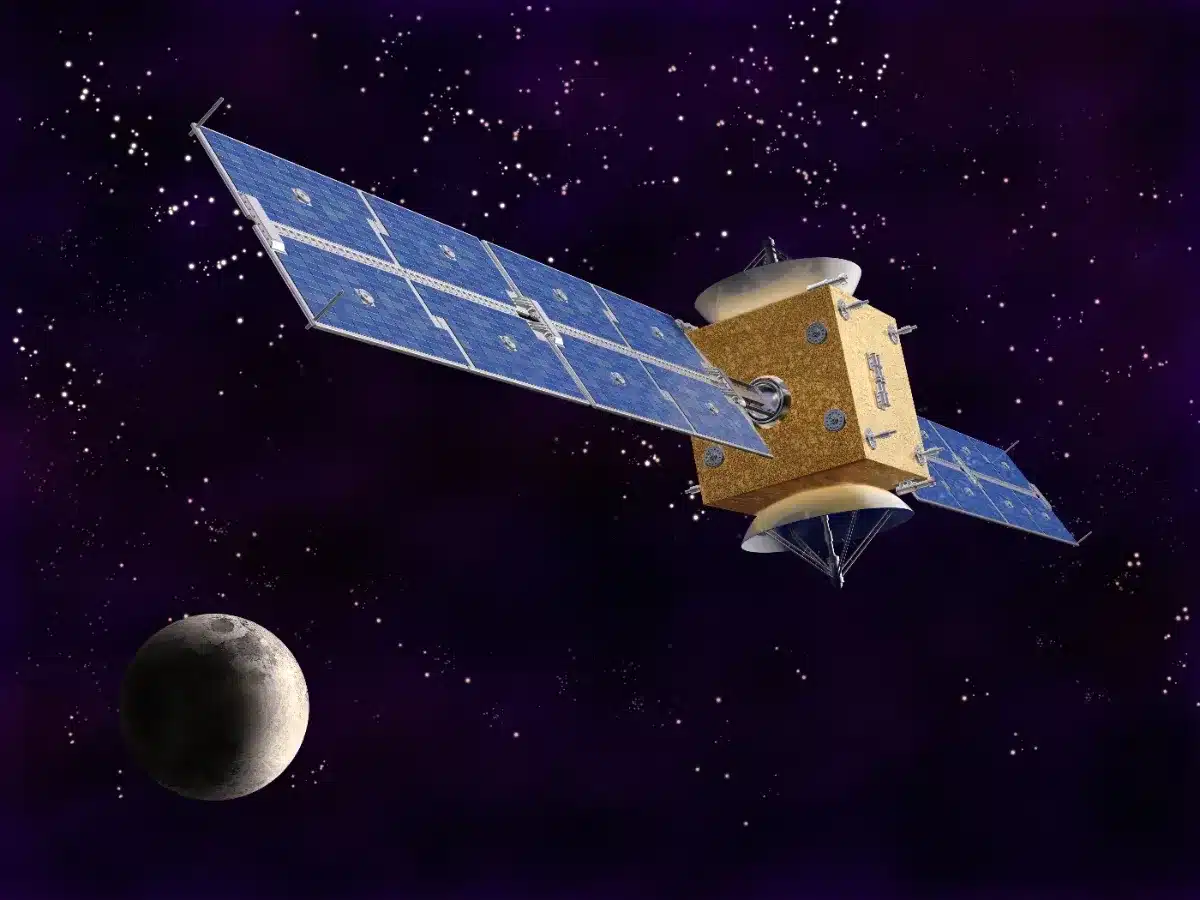
Launched on October 20, 2018, BepiColombo carries two main orbiters : the Mercury Planetary Orbiter (MPO) built by ESA and the Mercury Magnetospheric Orbiter (Mio) provided by JAXA. The spacecraft travel protected by the MOSIF shield (a heat-resistant protective shield) as they head toward Mercury.
A wide group of countries contributed to the mission, including France, Germany, Italy, United Kingdom, Belgium, Spain, and Switzerland, explain Sciencepost. French agencies like CNES and CNRS, plus several universities, also play a major role.
The mission hit a key phase on July 10, 2026, when it switched into a controlled free-fall toward Mercury after traveling over 9 billion kilometers. That unpowered descent leads to orbit insertion in November 2026, followed by the separation of the two orbiters. Mio will take a high elliptical orbit at roughly 12,000 kilometers from Mercury’s surface, while MPO will settle into a closer, circular orbit at about 1,500 kilometers. Scientific operations are scheduled to begin in April 2027.
What BepiColombo Wants To Learn
The mission has ambitious scientific aims. Mio will study Mercury’s magnetic field and how the magnetosphere interacts with the solar wind. MPO will focus on surface mapping and geological work, probing Mercury’s internal structure to shed light on its origin and evolution.
Together, the instruments will study Mercury to improve understanding of rocky planets and provide data relevant to studies of exoplanets.
Mercury has some unusual traits: it’s the closest planet to the Sun and has a core that makes up about 85% of its radius. Despite the heat, there is water ice in some polar craters where sunlight never reaches.
Navigation Challenges and Engineering Solutions
Getting a spacecraft to Mercury is difficult. One major challenge is Mercury’s gravity. To manage that, BepiColombo used gravity assists, two flybys of Venus and six of Mercury, to shape its path before the final approach. The energy needed to brake and slow down near Mercury is large ; the spacecraft must lose enough speed to be captured into orbit, so navigation and engineering have to be precise.
Another major hurdle is the extreme temperature swing. Mercury’s temperatures vary from -170°C to +430°C because of its thin exosphere and close solar exposure. The spacecraft must tolerate those swings, requiring advanced thermal engineering.
BepiColombo builds on data from missions such as Mariner 10 and NASA’s MESSENGER, which revealed Mercury’s large metallic core and ice-filled craters. This mission aims to provide a deeper picture of Mercury’s role in planetary formation.
As BepiColombo collects data, it may change hypotheses about the solar system’s history, including Mercury’s thin mantle, past giant collisions, and conditions near the young Sun. Scientists will use the results to refine models of planetary formation and evolution.