Table of content Table of content
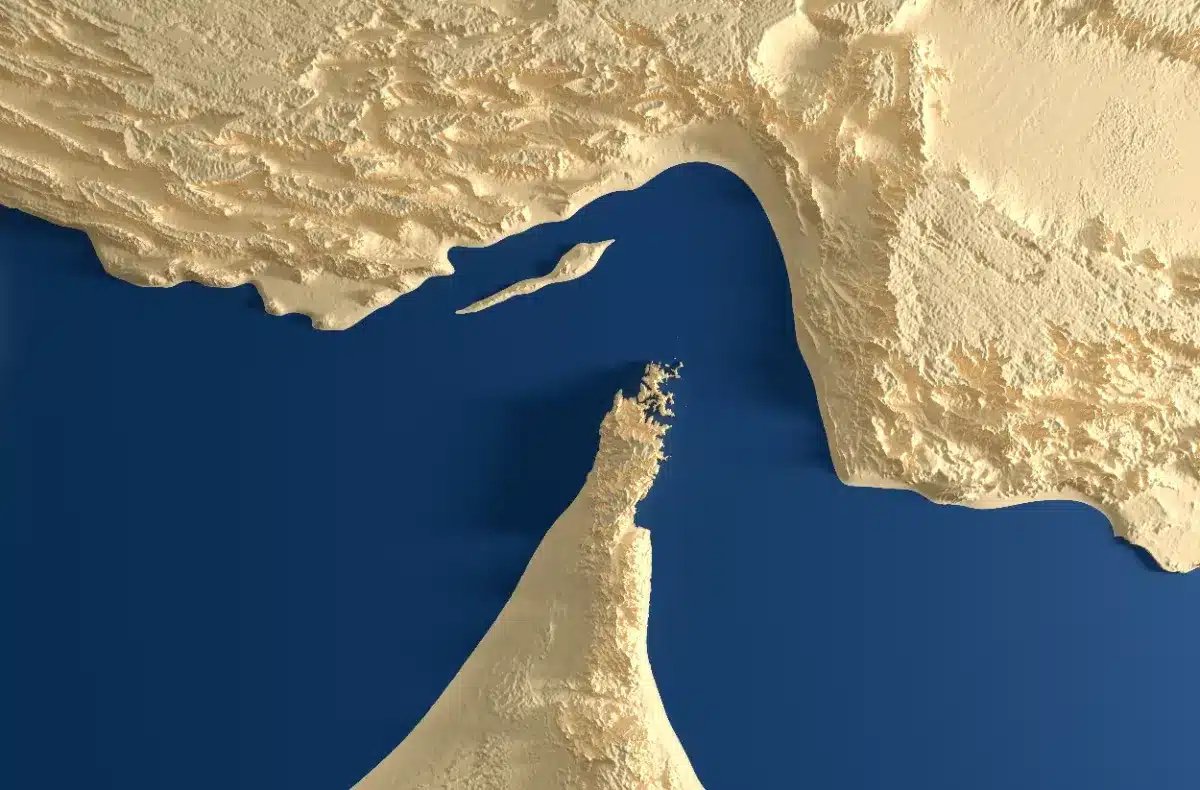
The maritime gateways, Bab al-Mandab and the Strait of Hormuz, have become flashpoints in a geopolitical standoff with potential effects on global trade. Recent reports say the Bab al-Mandab is blocked after Iran earlier disrupted the Strait of Hormuz. Taken together, those actions have been described by some as a maritime “siege” of the Persian Gulf with strategic and economic implications.
Tensions Around Key Shipping Chokepoints
The Bab al-Mandab, which literally means “Gate of Tears,” sits between Yemen and Djibouti. It handles roughly 12% of the world’s commerce and 25% of container traffic destined for the Suez Canal. Along with the Strait of Hormuz, it is central to geopolitical tensions involving the United States, Saudi Arabia, Iran, and the Houthi militia.
Tensions rose after the Houthi militia announced a blockade against Saudi ships on a recent Monday. By Tuesday they said they had forced six Saudi vessels off course near Bab al-Mandab. Those claims follow Iran’s earlier disruption of the Strait of Hormuz and suggest a coordinated effort to squeeze Saudi oil exports. Independent verification of the Houthi statements is still lacking, so uncertainty remains about what exactly occurred.
The Houthi actions align with a broader approach reportedly backed by Iran. Reuters has reported that Tehran told the militia to be ready to close Red Sea oil routes if the United States carried out strikes on Iranian energy infrastructure. That instruction is part of rising diplomatic and military tensions in the region.
What This Means for the Economy and Workarounds
For Saudi Arabia, having both Bab al-Mandab and the Strait of Hormuz blocked would be unprecedented, effectively trapping the kingdom between two closed sea lanes. The East-West Pipeline, which links eastern oil fields to Yanbu, offers an alternate route to the Red Sea, but it is not a complete fix. This 1,200 km long pipeline can transport up to 7 million barrels per day (bpd), but it cannot fully replace the safer open-sea passage through Bab al-Mandab and the onward transit across the Indian Ocean.
Another option is the Sumed Pipeline, which moves oil from Yanbu to Ain Sukhna in Egypt, and can act as a partial fallback. Still, its limited capacity means it cannot absorb the full load of rerouted shipments, which raises risks for the global energy market.
Analysts warn of sharp shifts in oil prices. Andreas Krieg from King’s College London has called this scenario a “strategic siege of the Persian Gulf,” while Jorge Leon from Rystad Energy points to a real risk of oil prices spiking, noting how fragile regional and global markets could become.
Rising Risks and Military Moves
The chance of a wider military clash is real, especially given asymmetric tactics such as anti-ship missiles, long-range drones, and explosive-laden vessels used by the Houthi militia. Those methods increase the threat to shipping at both Bab al-Mandab and the Strait of Hormuz, according to military analysts.
At the same time, the situation is complicated by public threats from U.S. leadership. U.S. President Donald Trump has directly threatened Iranian energy infrastructure, and there have been a string of attacks over an eleven-day period. No confirmed strikes on Iranian soil have been reported recently, but the risk of escalation remains, and parties on all sides are preparing for possible further conflict.
The strategic, economic, and military dimensions of this situation heighten regional instability. The combination of military planning and economic dependence makes the scene volatile, with consequences for countries that rely on these waterways. As events unfold, the international community is monitoring developments, given the critical role these straits play in global trade and energy flows.