Table of content Table of content
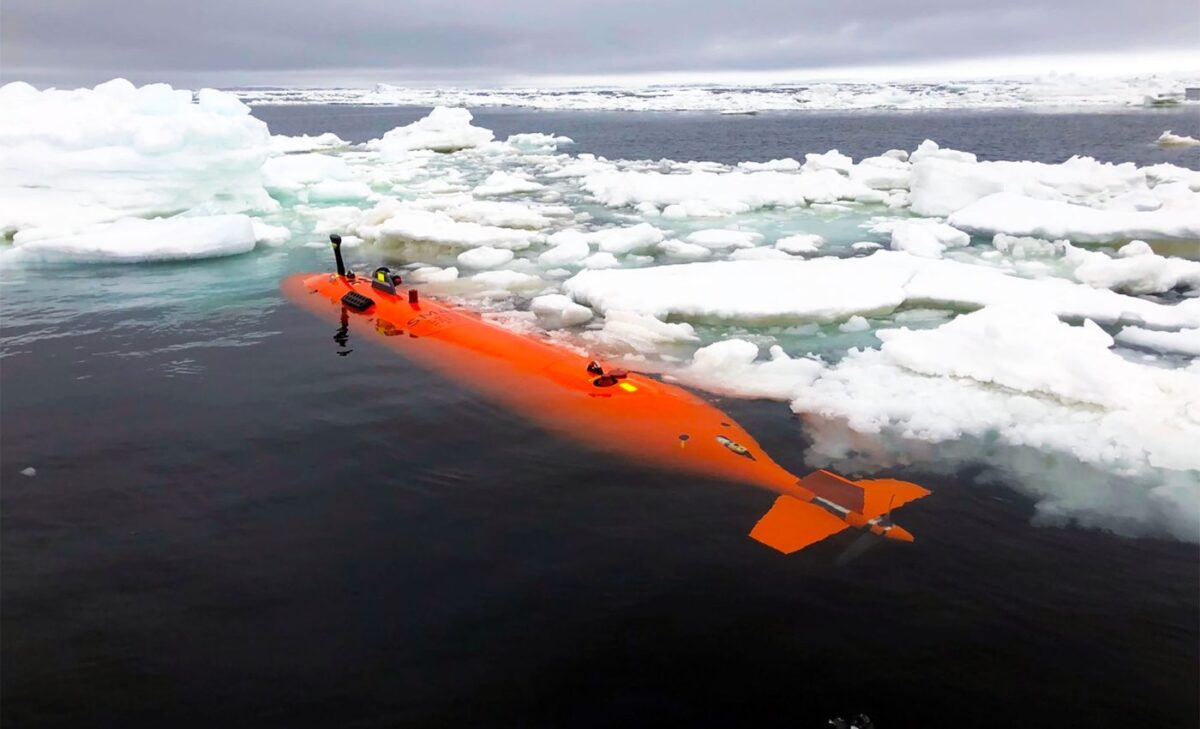
Some stories sound like science fiction, but this one is completely real. Meet Ran. This six-meter autonomous submarine, deployed by the International Thwaites Glacier Collaboration, was sent on a mission to explore somewhere no one had ever seen before: the underside of the Dotson Ice Shelf in Antarctica, wedged between the ocean floor and dozens of meters of ice. With no direct communication and no GPS, Ran dove into that frozen void in January 2022 and spent nearly a month down there, before suddenly vanishing without a trace.
What Ran found beneath Antarctica
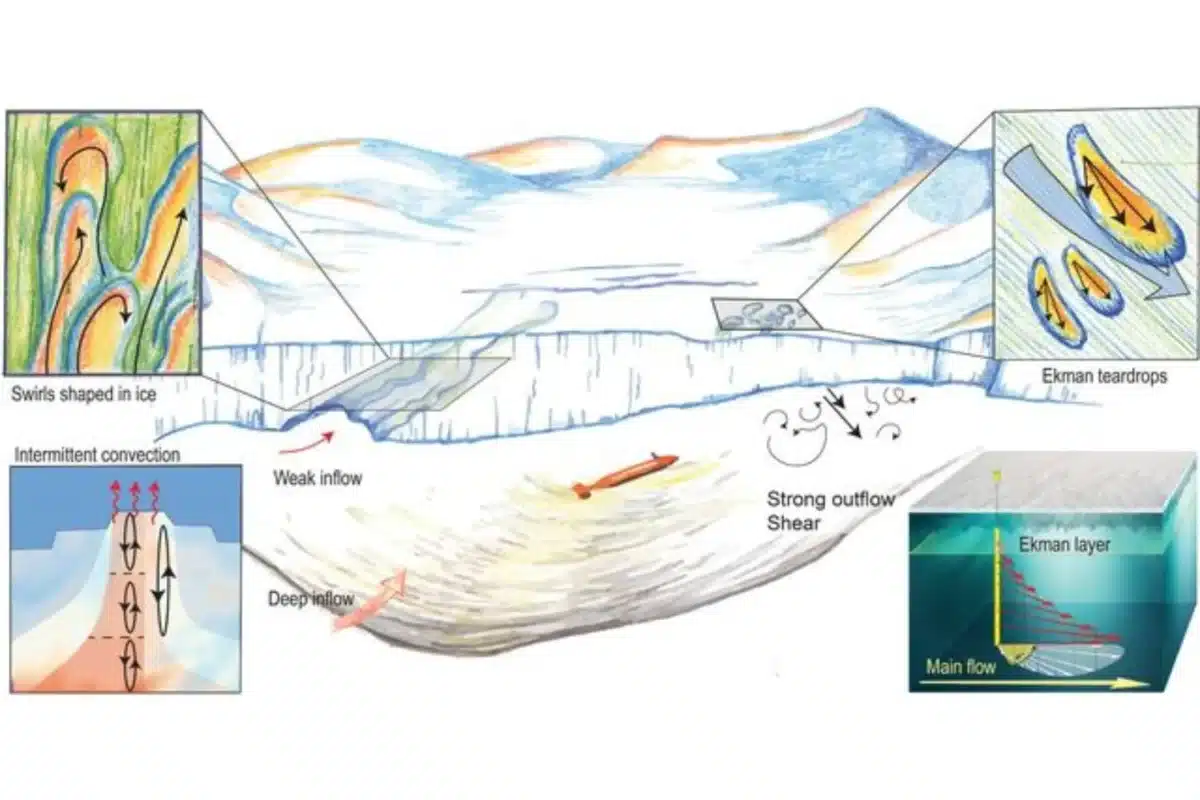
Armed with a multibeam sonar, the submarine mapped 140 square kilometers of the ice shelf’s underside with unprecedented precision. What it captured sent shockwaves through the scientific community. Rather than the smooth, featureless surface researchers had expected, Ran encountered a landscape of startling complexity, layered terraces, carved channels, open fractures, and distinctive teardrop-shaped structures stretching up to 170 meters long, tilted at 85 degrees by the Ekman spiral. None of this had ever been visible from satellite imagery.
But the most significant finding went deeper than the terrain itself. The data revealed that Antarctic ice melt does not follow a uniform pattern, overturning a long-held assumption among scientists. On the eastern side of the shelf, where currents move slowly, periodic surges of warmer water carve deep steps into the base through gradual erosion. On the western side, a current carrying warmer saltwater smooths and eats away at the ice in broad sheets. Two entirely different dynamics, playing out just a few kilometers apart.
A disappearance that raises more questions than answers
The implications are significant. When an ice shelf like Dotson thins, it becomes less effective at holding back the glaciers behind it, which then slide more quickly toward the ocean. Researchers estimate that melting beneath Dotson has already contributed around 0.5 centimeters to global sea level rise since 1979. By factoring in these complex underwater landscapes, future sea level predictions could be substantially revised, and not necessarily in a reassuring direction. Then, on one final mission toward the western side, Ran never came back.
No signal. No debris. The submarine disappeared into the same icy silence it had spent weeks exploring. A technical failure, a collision with the seafloor, some unknown biological factor, the team has floated possibilities, but no one has any real answers. Professor Anna Wåhlin, who led the project from the University of Gothenburg, has said the loss is painful, but that the discoveries Ran made are reason enough to press on. The team hopes to replace the submarine as soon as possible and resume its research, to finally unlock the remaining secrets buried beneath Antarctica, and perhaps find out what claimed the vessel built to survive them.
Source: Science.