Table of content Table of content
The Crimson Desert phenomenon is hard to ignore. Pearl Abyss’s sprawling fantasy open world has pulled in adventurers from every corner of the gaming landscape, eager to explore its vast universe. At launch, however, the critical reception was notably divided, proof, if any were needed, that this is a game that sparks genuine debate, even among developers themselves. This time, the spotlight falls on Dinga Bakaba, one of the creative minds behind Dishonored 2.
Pearl Abyss took a risk from the start
Yesterday, we looked at Michael Douse’s comments from Larian Studios, who marveled at Crimson Desert’s dense concentration of borrowed mechanics, a model he argued felt closer to free-to-play than traditional AAA. It turns out he’s not alone in identifying what makes the game’s design so unusual in the open-world space. Dinga Bakaba took to X to lay out exactly why he finds it so “interesting”, in a thread that’s worth reading in full. The current head of Arkane Lyon, the studio behind Dishonored and Deathloop, has clearly spent a meaningful amount of time with Crimson Desert. What he found surprised him, largely in a good way. He notes how the game flips the usual script:
Interesting how Crimson Desert functions opposite to most games of this type: generally the beginning is magical and after a while you start to see the strings ‘ah this is close to this game, oh this is going to be repeated etc You start with the gameyness front loaded: the inspirations, the controls, the systems: it’s almost all you see. But after a while all this takes the back seat: magic kicks in and doesn’t disappear because you have already accepted the rules/constitutive elements.
In our own review, we noted exactly how demanding Crimson Desert’s opening hours can be, for precisely the reasons Bakaba raises. And like him, we’d argue the journey is worth it. He draws a comparison to a board game where you initially see nothing but “the board and the rulebook,” before immersion quietly takes hold and pulls you into something deeper.
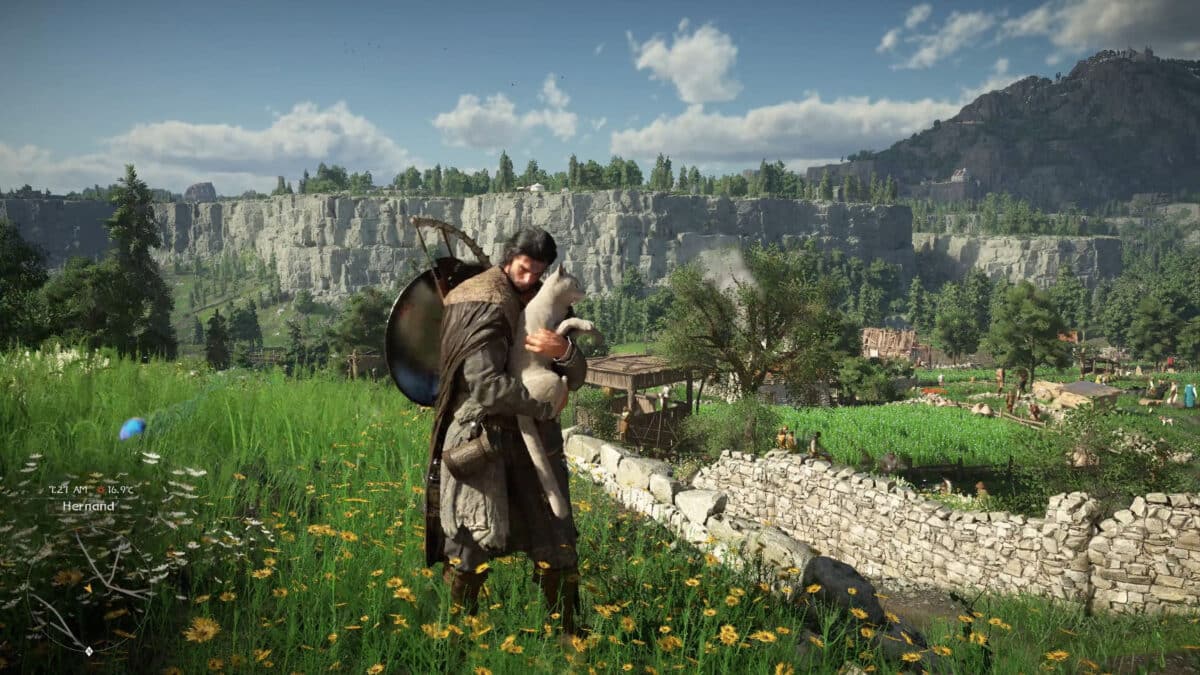
The magic of Crimson Desert eventually takes over
For Bakaba, Crimson Desert’s strength lies in doing the opposite of what most open-world games do, dazzling you visually first and layering complexity in later. Instead, it asks for patience upfront so that the adventure can build real momentum. And even then, the game never stops “introducing new things” throughout the story, elements that consistently deepen and reinforce the mechanics you’ve already internalized. He concludes:
All coalesces in a singular player journey from game to magic to discovery that might be why so many find investing time in it rewarding and ‘personal. In a time of fast consumption, a game that is sticky because it has friction, and not because it’s smiley feels amazing.
Bakaba is no casual observer, he was recognized as Best Director at The Game Awards in 2021 and named Personality of the Year at the Pégases in 2022. His considered take on Crimson Desert speaks volumes about why this game matters in 2026, and why it could well shape the future of open-world AAA design.
Source: Dinga Bakaba on X